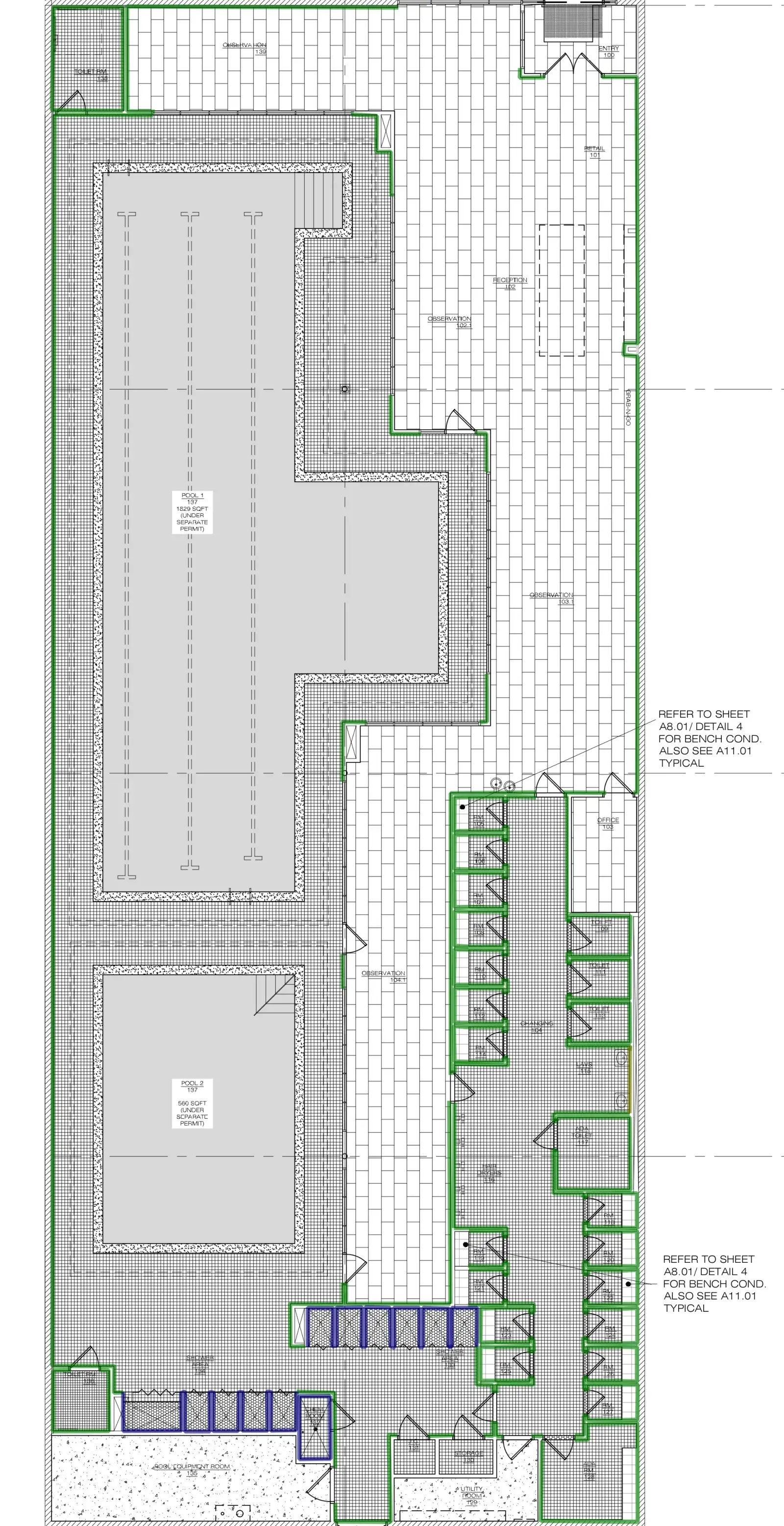
Sample Trade-Specific Quantification Schedule
Drywall framing, electrical branch wiring, domestic water copper, and rebar tonnage:
Worked estimating example. Quantities show the stated scope and format; this is not a client project or a project-specific price quote.
| Trade Scope Description | Quantity | Unit | Waste Allowance | Estimator Code Note |
|---|---|---|---|---|
| Trade Takeoff 01 - CSI Division 09 22 16 Metal Stud Framing & Drywall | 36,400 | SF | 10% Scrap | Includes 20ga studs, track, deflection clips, and Level 4 finish labor |
| Trade Takeoff 02 - CSI Division 26 05 19 Copper Wire & Branch EMT Conduit | 24,800 | LF | 8% Makeup | Includes all junction boxes, couplings, straps, and documented labor-hour assumptions |
| Trade Takeoff 03 - CSI Division 22 11 16 Domestic Water Type L Copper Piping | 3,200 | LF | 10% | Includes ProPress fittings, ball valves, and pipe insulation |
| Trade Takeoff 04 - CSI Division 03 20 00 Grade 60 Rebar Reinforcing Steel | 48.5 | TONS | 10% Lap | Bar-by-bar takeoff categorized by ASTM #4 to #8 bar sizes |
Scope and deliverables
Trade-Specific Surgical Subcontractor Takeoffs
For trade subcontractors, bidding precision is the difference between building a thriving enterprise and suffering painful jobsite losses. Generalist takeoff services that guess square-foot averages miss critical fittings, mounting hardware, and code-mandated accessories.
At F&K Estimatings, our trade-specialist estimators analyze your specific scope of work with surgical precision. We quantify every linear foot of conduit, cubic yard of concrete, stud piece-count, and plumbing fixture.
We provide complete trade-specific CSI MasterFormat Excel schedules, color-coded Bluebeam PDF markups, and localized labor hour projections on the delivery date confirmed in the written quote.
Scope, price, and delivery are confirmed after reviewing the project documents and requested deliverables.
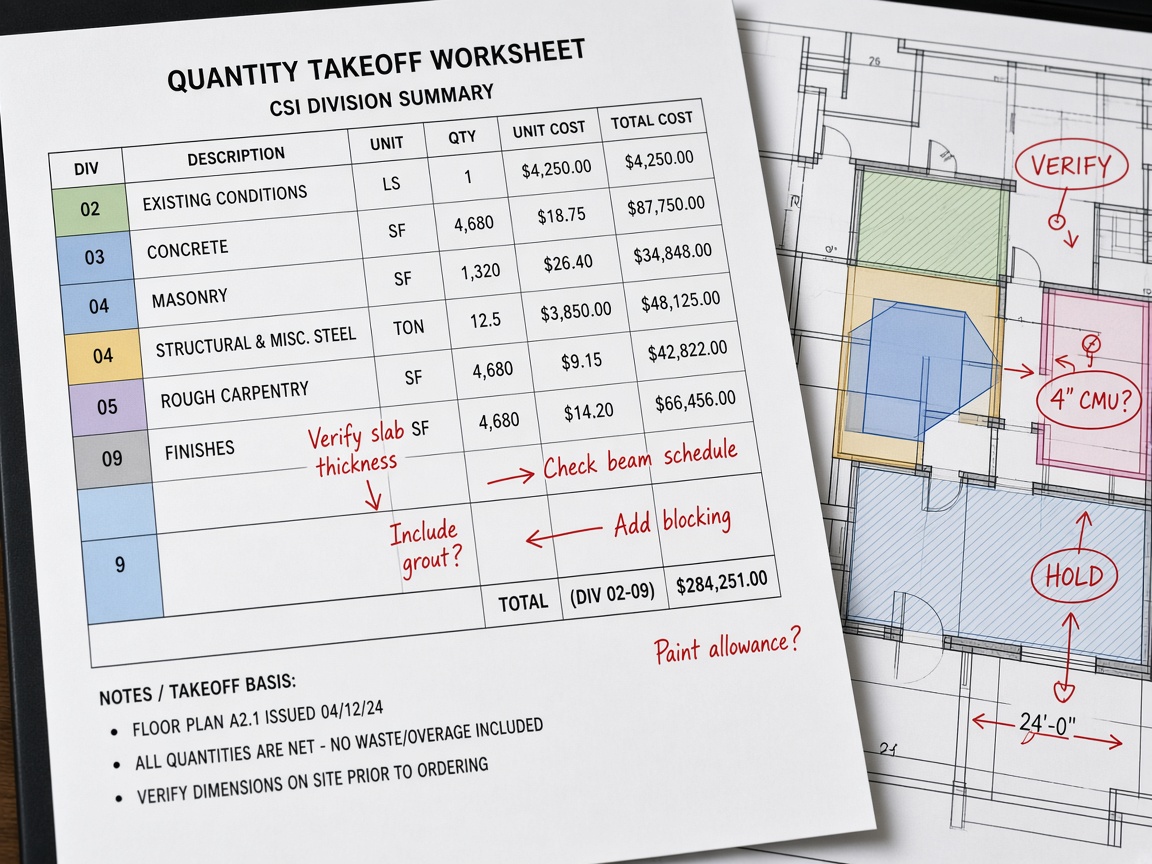
Deliverables for your agreed scope
Trade-specific quantity schedule
Quantities measured for your division only — concrete, framing, drywall, painting, mechanical or electrical — with no other trade's scope mixed in.
Color-coded markup set
Drawing sheets marked up for your trade, so every measured item can be traced back to the sheet and detail it came from.
Material and labor split
Material piece-counts and installation hours shown separately, so the takeoff feeds your own rates instead of replacing them.
Bid-day scope notes
Exclusions, allowances and drawing gaps recorded in writing, ready to carry into your proposal as qualifications.
Who this service supports
- Trade Subcontractors
- Specialty Trade Fabricators
- Self-Performing General Contractors
- Growing Trade Subcontracting Firms
- Material Suppliers & Distributors
Subcontractor Takeoff: quantities, checks and quote requirements
Subcontractor takeoffs measure one trade package in the format a trade contractor bids with: material quantities, labor units and a clean scope list.
Measurement and reporting basis
- Trade material counts, lengths, areas or volumes
- Assembly and specification reference by bid item
- Base scope, alternates and addenda changes
Documents to include
- Drawings for the trades you need measured
- Specifications or finish schedules
- Your preferred units and spreadsheet layout, if any
Also identify the current revision, addenda, project ZIP code, requested trades and bid deadline.
A scope check before pricing
Define the exact trade bid package and interfaces before measuring. Keep work supplied by others separate, and list alternates or addenda as identifiable revisions to the base takeoff.
Scope limits: Other trade scopes and installation means and methods are excluded unless included in the quote.
Worked estimating example
Identify the interface at the trade boundary
A plumbing package may require sleeves through a concrete slab. Sleeve supply, positioning and concrete blockouts can belong to different contractors.
- What the estimate should record
- List each interface with its responsible package. Keep work by others and unresolved responsibility separate from the measured base takeoff.
- Resolve before pricing
- Does the bid instruction assign sleeves, supports, firestopping and penetrations to this trade?
US project coverage for subcontractor takeoff
For US projects, include the ZIP code and the location-sensitive inputs below.
- Identify the project location, trade package boundaries and locally specified products or assemblies.
- Supply delivery, equipment-access and crew-rate assumptions if pricing is requested, rather than treating a quantity workbook as an installed-price quotation.
The proposal records the pricing date, cost sources and unconfirmed allowances. Explore US service area information or send your project details for a scope quote.
Use the document checklist above to request quantities only, a priced estimate or a review of an existing bid.
Request a subcontractor takeoff scope quoteScope coverage for your bid package
CSI Division 03 - Concrete Subcontractors
Foundations, slabs, grade beams, rebar schedules, formwork SFCA, and ready-mix cubic yards.
CSI Division 06 - Framing & Lumber Subs
Stick framing lumber packs, LVL/Glulam engineered timber, shear walls, and Simpson hardware.
CSI Division 09 - Drywall & Acoustic Subs
Light gauge framing studs, drywall hanging/taping, Level 5 finishes, and ACT suspended ceilings.
CSI Division 09 - Painting & Flooring Subs
Wall surface areas, epoxy floor coatings, LVT, carpet tiles, porcelain tile, and cove base.
CSI Division 22 & 23 - Mechanical & Plumbing Subs
Sheet metal ductwork (lbs), RTU equipment, domestic water, DWV piping, and documented labor-hour assumptions.
CSI Division 26 - Electrical Subcontractors
Conduit runs, wire footage, switchboards, lighting fixtures, and low-voltage drops.
How your estimate is prepared
Send the drawings for your trade, the bid form and the deadline. We measure your division's scope, mark up the sheets, and return a schedule you can price with your own rates. The takeoff method we use, from markup to schedule, covers the review steps and version control behind each quantity.
Estimating fees and delivery
Subcontractor takeoff fees follow the division and the drawing count — a single-trade takeoff from a small set is a smaller job than a multi-sheet package with complex assemblies. Most single-trade takeoffs are delivered in 24–48 hours after approval; the written proposal confirms the exact fee and date for your scope before work begins.
| Scope / project type | Typical delivery | Typical fee |
|---|---|---|
| Single-trade material takeoff | Typically 24–48 hours after approval | $150–$1,000 typical |
| Residential construction estimate | Typically 2–4 business days after approval | $400–$1,000 typical |
| Commercial preconstruction package | Typically 3–5 business days after approval | $150–$1,000 typical |
| Industrial & heavy civil takeoff | Typically 4–7 business days after approval | $1,000–$5,000+ typical |
| Ongoing estimating support | Priority queue agreed in writing | $1,800/mo typical |
Takeoff fees cover the measurement work above. Division, sheet count and deadline decide what the written proposal says.
Frequently asked questions
What is a specialized subcontractor takeoff and how does it differ from a GC estimate?
A subcontractor takeoff measures the agreed trade scope, such as electrical, plumbing, drywall or framing, with quantities organized so the trade contractor can price them. A general contractor estimate can combine several trade packages. Labor hours, rates and priced totals are included only when requested in the written scope.
Do you calculate trade-specific crew labor hours using union and open-shop rates?
Labor hours can be included when requested. The quote and workbook identify the labor basis and installation assumptions; crew selection and site productivity remain contractor decisions.
How does outsourcing trade takeoffs save subcontractors money and time?
Most trade contractors spend exhausting nights and weekends estimating after full days on the jobsite. Outsourcing converts that manual burden into professional, audit-ready Excel schedules and color-coded Bluebeam markups, so you can bid more projects without adding in-house estimating staff.
How do you account for specialized architectural specifications and details?
We perform a forensic spec read across Division 00 through Division 33. We identify expensive hidden requirements—such as seismic clip angles, specific epoxy formulations, UL firestopping details, or proprietary fastener patterns that generic estimators overlook.
What is your typical turnaround time for a subcontractor trade takeoff?
Delivery depends on the drawing set, requested trade scope, pricing requirements and bid deadline. The delivery date, scope and revision coverage are confirmed in the written quote after document review.
Coordinate related trades
Subcontractors often bid alongside other trades — send the drawing set via the bid room when it is large or confidential.